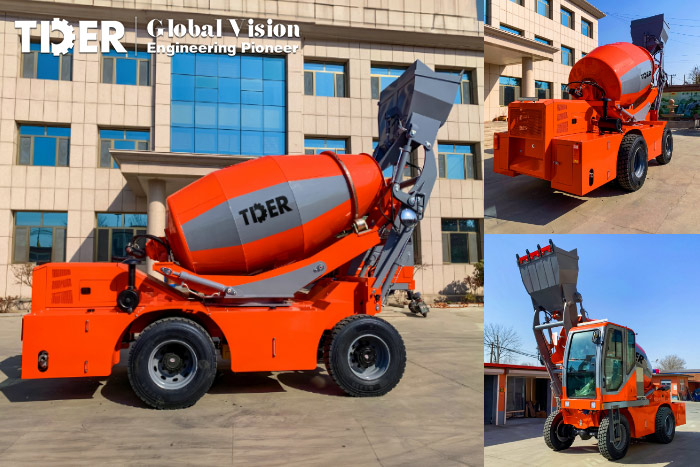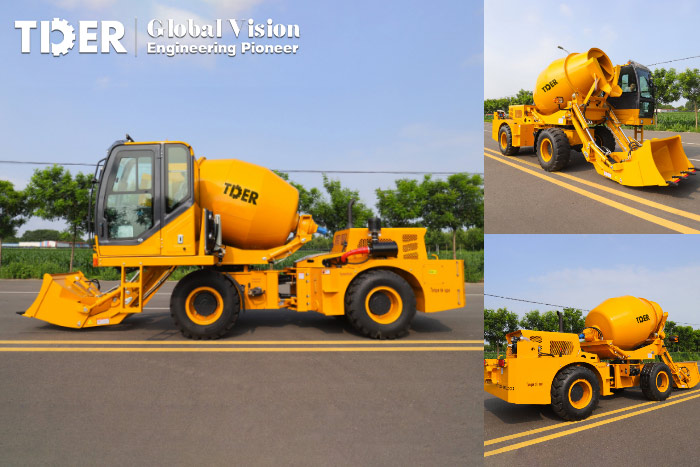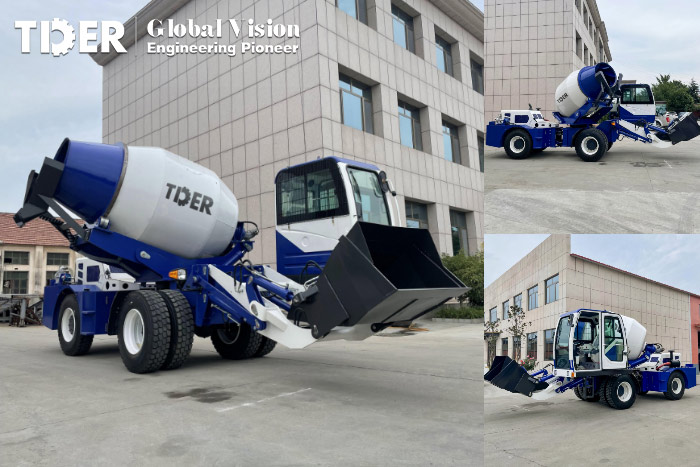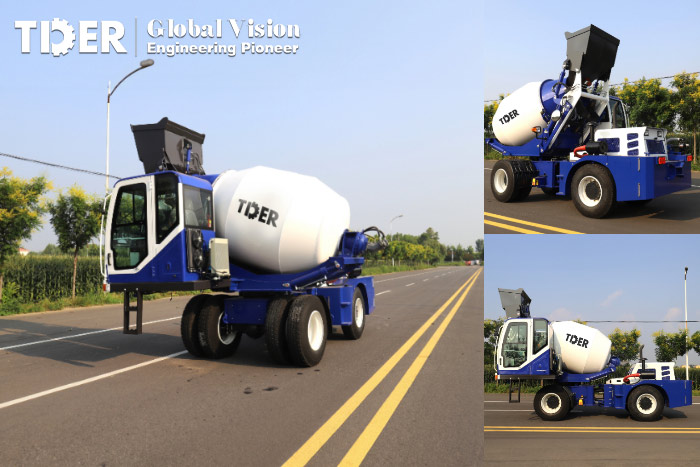
leave a message
leave a message
If you are interested in our products and want to know more details,please leave a message here,we will reply you as soon as we can.
Company News

Industry News

How to Pick the Right Mixer: TDER’s Selection Guide

June 03, 2026

With global infrastructure development continuing, self-loading concrete mixers are seeing wider use in rural road construction, small-scale infrastructure, and distributed projects, driven by their integrated load, measure, mix, and transport functions.

At the same time, varying construction environments have led to a clear split in equipment design, with two chassis configurations now in use: integrated and articulated. The two types differ significantly in load-bearing performance and terrain adaptability, making correct selection a key factor in operational efficiency.

Against this backdrop, TDER is offering structured selection guidance through a combination of chassis options and scenario-based configurations tailored to different working conditions.


I. Choosing Between Integrated and Articulated Chassis: Matching Design to Site Conditions

1. Integrated Chassis: Stability and Continuous Operation at the Forefront

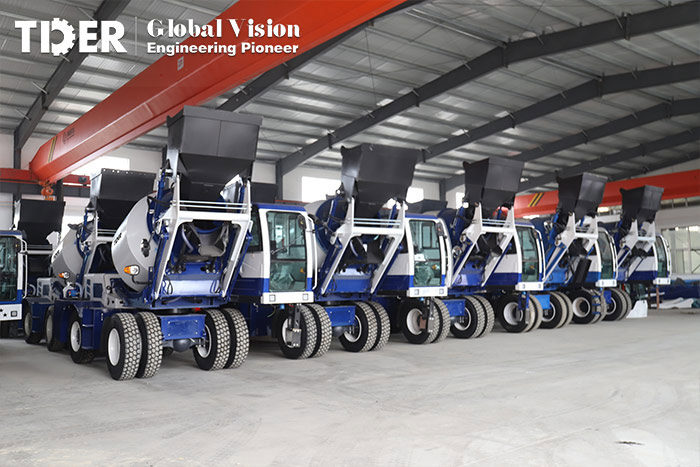
Integrated self-loading concrete mixers use a single-frame design that combines power, drive, and mixing systems into one cohesive structure. This approach enhances structural rigidity and heavy-load stability, making the equipment well-suited for continuous operation scenarios.

For instance, the TDER 4.2m³ integrated self-loading mixer TCM42 demonstrates several key strengths:

(1) Structural Integrity and Load Handling

The single-frame construction improves overall rigidity, with direct and predictable load paths that boost torsional and fatigue resistance. This ensures structural stability and reliable operation under heavy loads, continuous vibration, and dusty or complex construction conditions.

(2) Operational Performance

Equipped with a 270° rotating discharge system, the mixer allows continuous concrete placement on site. The integrated chassis supports high-volume production and transport, maintaining efficiency even under high-intensity, uninterrupted work schedules.

(3) Ideal Applications

Integrated mixers are best suited to large construction sites, roads, municipal infrastructure projects, and rural concentrated developments. On relatively fixed routes with low relocation frequency, their continuous operation capabilities can be fully leveraged.

(4) Limitations

The longer wheelbase reduces manoeuvrability on narrow roads, tight corners, or complex terrain, meaning minimum site conditions must be met.

Overall, integrated chassis prioritise stability and uninterrupted output, making them the preferred choice for heavy-duty, continuous work environments.


2. Articulated Chassis: Designed for Complex Terrain and High-Mobility Operations

Articulated self-loading concrete mixers use a front–rear hinged steering structure, providing a tighter turning radius and stronger adaptability to uneven terrain. The design prioritises mobility and access in challenging working environments. 

For example, the TDER 2.6m³ articulated self-loading mixer TCM26 demonstrates the following characteristics:

(1) Terrain Adaptability and Mobility

The articulated joint allows controlled relative movement between the front and rear frames, enabling the vehicle to maintain four-wheel ground contact on muddy, uneven, unpaved surfaces or temporary access roads. This improves traction and reduces the risk of wheel slippage.

(2) Manoeuvrability and Operational Flexibility

The central articulation steering system delivers a reduced turning radius, allowing operation in narrow roads, mountainous terrain, or densely built construction areas without frequent reversing. This improves manoeuvrability and overall workflow efficiency in confined sites.

(3) Suitable Work Conditions

Articulated mixers are best suited to small-batch, on-site mixing and immediate pouring applications, particularly in projects where work locations are dispersed, road conditions are poor, and frequent relocation is required. Reduced reliance on external transport improves overall operational efficiency.

(4) Structural Limitations

Compared with integrated chassis, the articulated joint generally provides lower torsional rigidity and reduced stability under heavy, high-volume transport conditions. On long-distance, high-speed travel, body movement may be more pronounced, affecting ride comfort and smoothness.

Overall, the articulated chassis is optimised for terrain adaptability and performs particularly well in complex environments and low-standard road conditions.


II. Cab Options: Selecting Between Fixed and Synchronous Rotating Operation

As construction projects demand greater precision, self-loading concrete mixers are evolving with new operational features, notably enhanced visibility and bi-directional operation.

TDER’s 3.5m³ self-loading mixers TCM35A and TCM35C exemplify two key technical approaches:

1. Fixed Cab Structure: TCM35A

The cab is mounted rigidly on the front frame, keeping a stable orientation independent of drum rotation. This provides drivers with consistent spatial reference, improved visibility, and minimal interference during operation.

The drum offers 270° unidirectional discharge, supporting continuous concrete placement during transit. For linear projects such as canal construction, the combination of fixed-angle discharge and steady travel speed ensures uninterrupted workflow.

The fixed cab design prioritises operational stability and straightforward task execution, making it well-suited to linear or routine construction environments.


2. Synchronous Rotating Cab Structure: TCM35C

The cab rotates in sync with the drum, allowing 90° rotation to either side for full 180° discharge coverage.

This setup improves operator oversight of concrete distribution and thickness in real time, enhancing placement precision. Bi-directional driving is enabled, allowing back-and-forth operation on mountain roads, narrow sites, or areas lacking turning space, reducing dependence on site layout.

The synchronous rotating cab maximises visibility and operational efficiency in constrained environments, making it ideal for mountainous terrain, tight construction zones, and projects requiring frequent manoeuvring.


III. Key Advantages of TDER Self-Loading Concrete Mixers

Beyond chassis and cab choices, international customers increasingly focus on long-term performance, operational safety, and maintenance convenience. TDER positions itself on technical innovation rather than price competition, offering a multi-dimensional value proposition:

1. Core Operating System: Drum and Support Structure

The drum is treated with an epoxy primer and constructed from manganese steel to resist corrosion and wear. Internal blades feature a multi-blade + spiral guide + paddle design, enhancing feed efficiency, mixing uniformity, and continuous discharge, while minimising segregation. Dual support wheels ensure even force distribution and stable rotation, enabling smooth, reliable operation under diverse conditions.

2. Market-Differentiated Features: Standard Wide-Body Cab and Automotive-Grade Wiring

TDER uniquely offers a wide-body luxury cab as standard, 12 cm wider than competitors. The cab includes shock-absorbing seats and air conditioning, ensuring operator comfort across multiple climates. Electrical systems are upgraded with automotive-grade wiring, providing protection against rain, moisture, and fire, reducing the risk of system failures and safety incidents.

3. Maintenance Efficiency Optimisation: Front-Centralised Lubrication System

Daily maintenance is simplified through centralised lubrication points at the front, lowering chassis downtime, improving servicing efficiency, and reducing overall maintenance costs.


Choosing a self-loading concrete mixer ultimately depends on work conditions, transport requirements, and operational intensity. Integrated and articulated chassis are suited to different terrains and workloads, while fixed and rotating cabs meet distinct operational needs. TDER offers a systematic approach combining structural and operational configurations, providing clear guidance for equipment selection and enhancing operational stability and machine suitability across diverse construction environments.

Request a Quote

leave a message

leave a message
If you are interested in our products and want to know more details,please leave a message here,we will reply you as soon as we can.
Start a Conversation

Hi! Click one of our members below to chat on